The symptom is one symptom
A person who hears a voice, loses the thread of logic and loses the capacity for affection is describing precisely what the tradition called possession. The vocabulary differs. The phenomenology does not.
Keppe Pacheco Trilogical College · Department of Theology
A scientific study of the link between possession and psychopathology — and the practical consequences once the two are no longer kept apart.
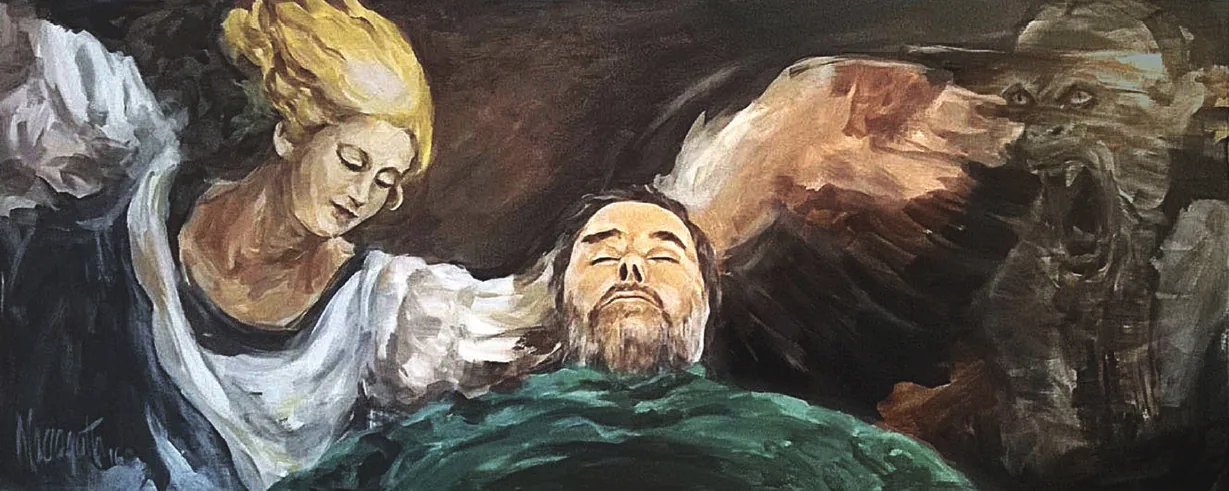
“Humanity is on the verge of solving its greatest problem, which is to free itself from the satanic power that took over the twentieth century.”Norberto R. Keppe
Exorcism and medicine have been separated for a very long time, and the separation has made it almost impossible to say what belongs to which. The result is a double blindness: the doctor is trained to treat a body with no psychological life, and the exorcist is trained to address a spirit with no body, no history and no mind.
If exorcism worked the way it is usually imagined, a single session would free the possessed. It does not. The process can drag on for years — which is itself evidence that something in the psyche is doing work that prayer alone cannot reach.
And if mental illness were only a matter of the brain, then anaesthetising the perception until the voices stop would be a cure. It is not a cure. It is silence.
“The split between exorcism and medicine has caused great confusion.”Norberto R. Keppe
Keppe's claim, developed across five decades of clinical practice and more than thirty books, is simple to state and difficult to live with: psychosis and possession are not two conditions that happen to resemble each other. They are one human movement seen from two sides — the clinic and the sanctuary, the inside and the outside.
That claim has consequences for both professions. It tells the exorcist that the demon cannot simply be commanded away from a person who has not yet withdrawn his consent. And it tells the psychiatrist that a mind is not a machine to be quietened, but a freedom to be brought to consciousness.
Keppe's clinical finding was not that possession is “really” psychosis, or the reverse. It was that the two describe a single human movement — and that treating it from only one side leaves half the person untouched.
A person who hears a voice, loses the thread of logic and loses the capacity for affection is describing precisely what the tradition called possession. The vocabulary differs. The phenomenology does not.
Every mental illness has a spiritual component, and every spiritual affliction has a psychological one. Treat one and you have treated half a person — which is why the exorcist and the physician so often plateau at the same place.
What changes is not the demon’s address but the person’s consent. Conscientization — seeing one’s own inverted intention — is what finally makes the influence let go. This is the part neither tradition can supply alone.
The thesis in its plainest form: a patient describes the sanatorium where the bed was bolted to the floor, and Keppe asks who lifted it.
One sittingThirty propositions in three parts, translated into four languages. Download the PDF in English or Portuguese — no account, no checkout.
The long wayFrom the split between the disciplines to the mechanism of resonance, and what conscientization actually changes. The science, in order.
Ten pieces from the book, from clinical dialogues and from the teleclasses — the shortest route into the argument after the book itself.
The mistake at the root of both disciplines: demons treated as human beings who merely happen to be out of sorts.
Read · 3 minPsychosis can be identified as a kind of possession — which is why the individual is so illogical and so deficient in affection.
Read · 2 minWe are never good — or bad — alone. What that means for diagnosis, for treatment, and for an ordinary day.
Read · 3 minAre demons real, or only symbols of human attitudes? Keppe’s answer is neither — and the reason is clinical.
Read · 7 minWe are not operating alone — and not only psychotics are influenced by malicious spirits.
Read · 2 minThe spiritual life has two directions. Perceiving which one is operating is the difference between clarity and catastrophe.
Read · 3 minWe did not leave paradise. We stopped accepting that we were in it.
Read · 2 minHobbes said man is a wolf to his fellow man. Keppe’s consulting room suggests something considerably worse.
Read · 3 minGood. Evil. What’s the difference? There are universal laws we break when we do something nasty — and it pays to know it.
Read · 5 minAn eight-part series on Keppe’s book, hosted by Richard Lloyd Jones with psychoanalyst Cláudia Bernhardt Pacheco. Produced by the Department of Theology of the Keppe Pacheco Trilogical College, and broadcast on the STOP Radio Network.
The influence no one talks about: the very real influence from the spiritual world.
We explore the perverse human attraction to evil — and why it is not a metaphor.
Looking at the intricate way natural processes mesh together, we would be foolish to rule out a divine cause.
We seldom in our modern world even think of putting temptation down to influence from nefarious spirits.
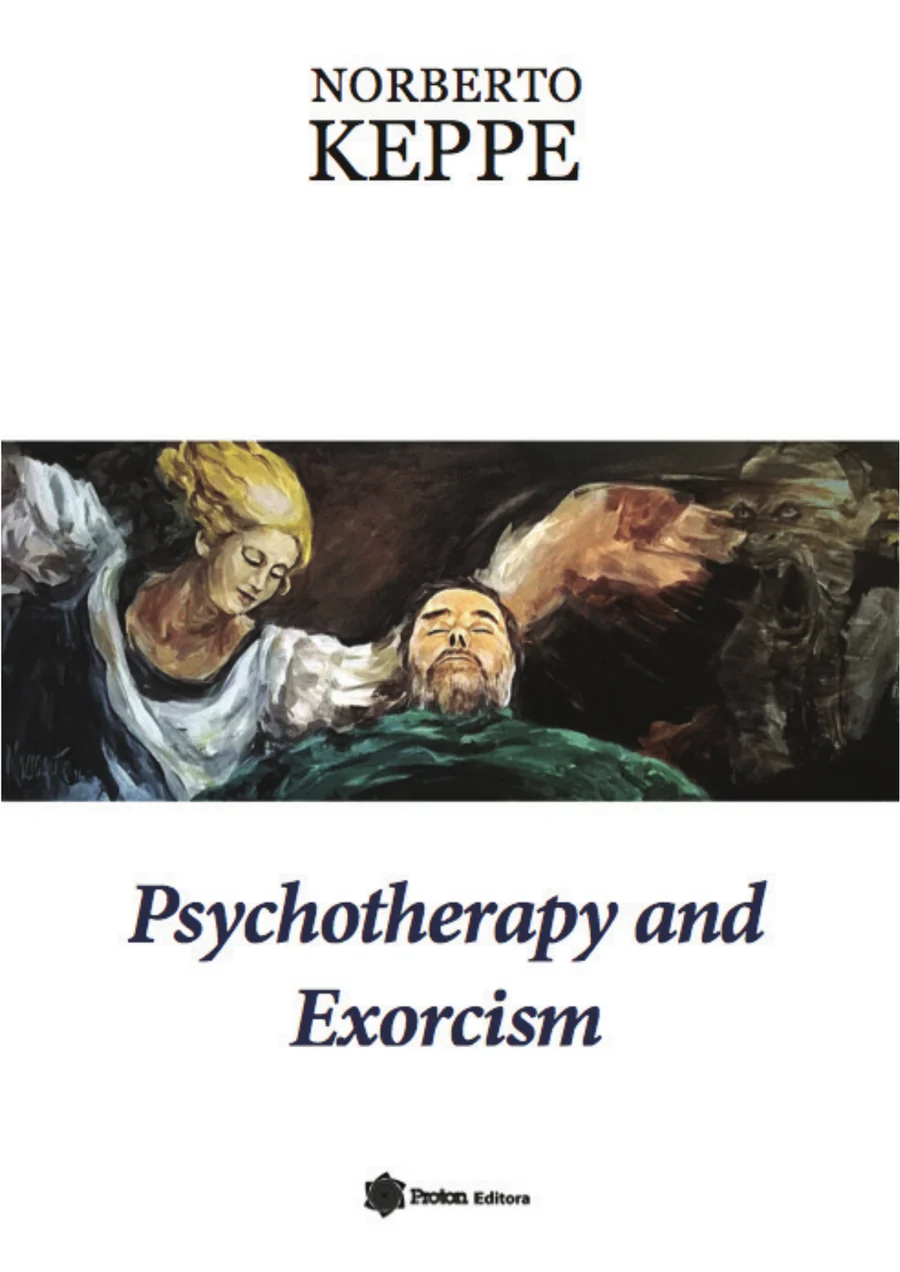
Thirty propositions in three parts. What the possessed and the psychotic share; why society is structured exactly like a mental patient; and how consciousness of goodness is the only route to understanding evil.
No cart, no account, no email required. The Portuguese edition and the Spanish and Italian covers are on the book page.
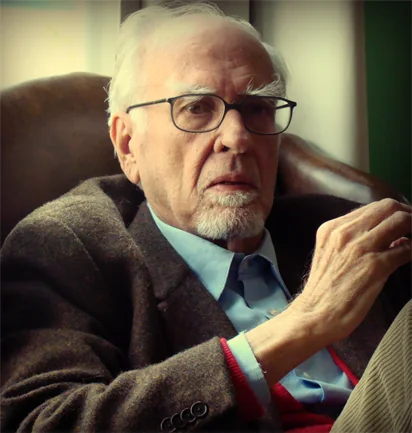
Norberto R. Keppe trained in Vienna, where he worked with Viktor E. Frankl at the Polyclinic Hospital and School of Existential Analysis, with Knut Baumgarten at the Child Guidance Clinic and with Igor Caruso in the Deep Psychology Circle. He was a guest professor for many years at the Pontifical Catholic University (PUC) in São Paulo and at the University of São Paulo School of Medicine, among other institutions. He has written more than thirty books, translated into eight languages, and has attended clients all over the world — including five years in New York and eight in Europe, where he developed most of his work in socio-pathology, metaphysics and the new physics.
“Undoubtedly the most original heterodox contemporary writer of our times.”French National Centre for Scientific Research (CNRS)
Thinking with Somebody Else's Head has been broadcast since 2006 — three hundred programmes on psychology, philosophy, society and religion, every one of them transcribed and searchable. It is free, and it is the best place to hear the science being worked out.
Questions, permissions, or a group reading the book together?
Write to us